There's a moment, usually somewhere between the third page of a notebook and the fourth biro that has given up mid-sentence, when a fountain pen starts to look less like a hobby and more like common sense. It glides over long stretches of writing, it costs less per page once you're buying ink by the bottle, and it makes handwriting feel deliberate rather than dutiful. The catch is choice: walk into a good stationer's, or open a specialist website, and you'll meet a wall of nibs, fillers and inks that assumes you already know what you want.
You don't need to. Here's how to pick a first pen you'll still be using next year.
Start With the Nib, Not the Barrel
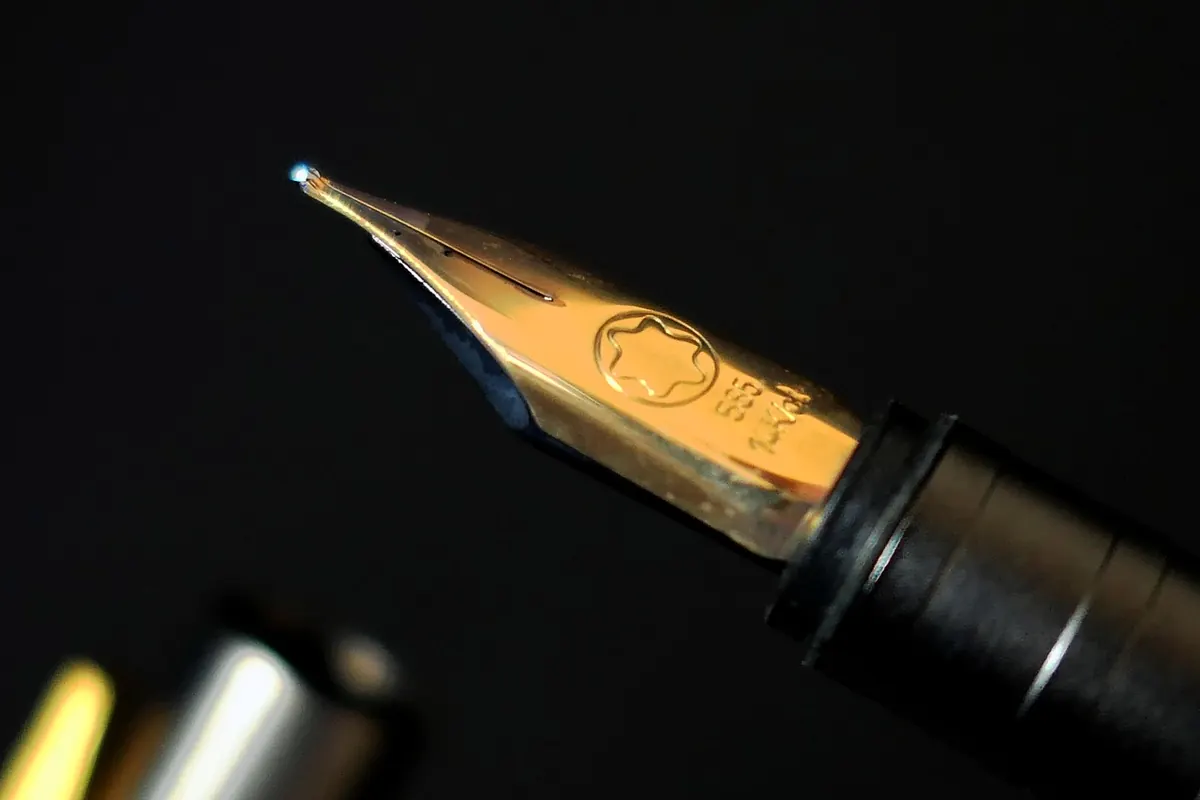
The nib is the part that touches the paper, and it decides almost everything about how the pen feels. The finish, the clip, the colour — decoration by comparison.
Pen makers describe nibs by width: extra fine, fine, medium, broad, plus the occasional stub or italic cut for calligraphy-flavoured writing. Sizes aren't standardised. A Japanese fine is noticeably narrower than a European fine, and a medium from one brand can write like a broad from another. If you write small, in a planner, or on cheap paper, start fine. If your handwriting is larger and you want ink to show its colour, medium or broad will suit you better.
A rough guide to common nib sizes
- Extra fine — tiny, precise letters; ideal for forms, margins and thin paper; can feel slightly scratchy if the pen is cheap or you press hard.
- Fine — the safe all-rounder for most UK writers; behaves well in notebooks and on office paper.
- Medium — wetter and smoother, shows off ink colour, needs paper that can take it.
- Broad — bold and expressive; best for signatures, letters and generous margins.
- Stub and italic — flat-tipped, giving line variation; a fine second pen, rarely a first one.
Steel nibs are standard at the beginner end and many are excellent. Gold nibs are softer and more expensive, and they are not a requirement for pleasant writing.
Understand Filling Systems Before You Buy
Most entry-level pens take ink one of three ways, and the choice affects both running costs and convenience.
Cartridges are sealed plastic tubes of ink that push into the back of the section. They're clean, quick to swap and widely stocked in the UK, but you're limited to the brand's own cartridges unless the pen takes "international standard" ones — which many do, and it's worth checking.
Converters are refillable cartridges that let you draw ink from a bottle. A pen that accepts both cartridges and a converter is the most flexible option: use cartridges when you're travelling or busy, bottles when you want a wider choice of colours and lower running costs. Converters are usually sold separately, so add one to the basket.
Piston and vacuum fillers hold a lot of ink and fill straight from the bottle without a converter. They're satisfying to use but harder to clean and generally pricier. Not a bad first pen, just a less forgiving one.
Choose Ink You'll Actually Enjoy
Ink is where a fountain pen gets personal. Blue and black are the practical defaults, and blue-black is the quietly competent middle ground for anything that might be photocopied.
Beyond that, modern inks come in every colour you can name. Two practical points matter more than shade. First, drying time: some inks sit on the page for a while, which is worth knowing if you're left-handed or writing quickly in meetings. Second, cleaning: standard dye-based inks rinse out easily, whereas pigment, iron-gall and shimmer inks need more care and shouldn't be left sitting in a pen for weeks. If a wild colour tempts you, buy a small sample first.
Paper deserves a mention too. Fountain pen ink behaves far better on smooth, coated paper than on thin recycled stock, so if your pen feels rough at home but fine in a decent notebook, the paper is the culprit, not the nib.
Look at Weight, Grip and the Small Details
A pen you don't enjoy holding will stay in the drawer, however good the nib is.
- Weight and balance: resin and plastic pens are light; metal feels more substantial but tires the hand over long sessions. Try writing a full paragraph, not just a signature, before deciding.
- Section shape: triangular or moulded grips guide the fingers but can annoy people who hold a pen unusually.
- Cap posting: posting means pushing the cap onto the back end while writing. It adds length and weight, and some pens are designed for it while others aren't.
- Length: pocket pens are handy for commuting but need posting; full-size pens are more comfortable at a desk.
- Cartridge type: proprietary cartridges can be harder to find on the high street, so check before you commit.
What to Buy First, and What to Spend
You don't need to spend much. A dependable first fountain pen sits at the low end of the market, and the difference between a cheap pen and a very cheap one usually shows up in the consistency of the nib rather than the styling. Brands that beginners in the UK commonly start with — Lamy, Kaweco, Pilot, Platinum, TWSBI, Waterman and Parker among them — all make models in that range.
Buy from a stationer or pen shop rather than a marketplace listing when you can. Advice is worth more than a small saving here, and some shops will let you dip-test a nib. If a pen arrives writing dry, scratchy or skipping, that's usually a fixable nib issue rather than something you have to live with; a specialist can adjust it.
A Simple Routine for Your First Pen
Fill it with one ink and write with it for a fortnight before buying anything else. Flush the nib and converter with cool water every few fills, and more often if you're using pigment inks. If the pen will sit unused for a while, empty and clean it rather than letting ink dry inside. Store it nib-up, keep a notebook you like within reach, and don't fuss over a second colour until the first one is finished.
That's the whole method: a fine or medium nib, a converter, one bottle of ink, and enough paper to notice how much better a page can feel. The rest is shopping, and there will be plenty of time for it.
Photo: moritz320 / Pixabay