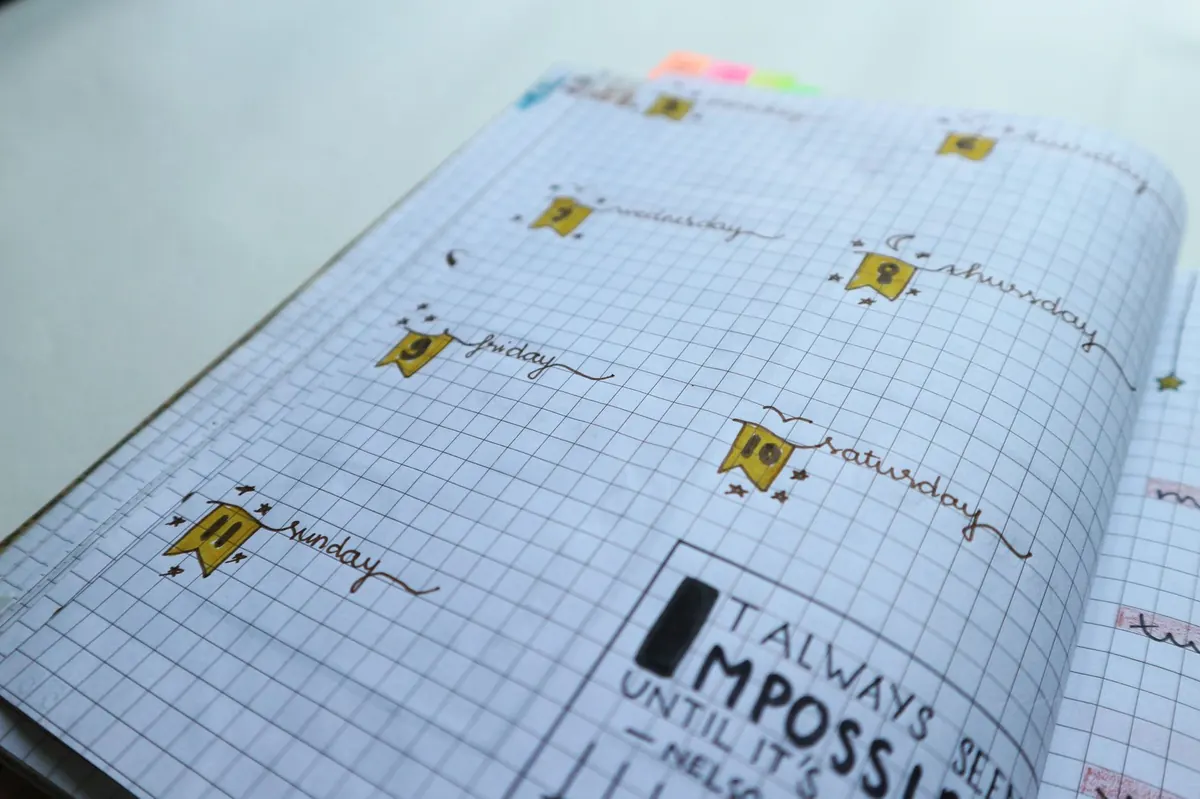
Autumn arrives in Britain with a specific set of signals. A cold morning that smells faintly of woodsmoke. Darkness settling in before the school run is finished. The clocks going back at the end of October, handing you an hour you didn't have the week before. And, for a great many writers, a quiet urge to buy a new notebook.
It is the season that asks two questions at once: what has this year actually been, and how do I want to spend the darker half of it? A journal is a good place to answer both. Not a rushed five-minute entry squeezed in before bed, but something slower — twenty minutes a week, a few prompts, and a pen you enjoy using.
Why a Seasonal Reset Beats a Resolution
January resolutions tend to be about becoming a different person. Autumn asks something gentler. It is a hinge: summer's momentum is over, work and school routines have snapped back into shape, and your energy is beginning to turn inwards. That makes it a good moment to take stock — not to overhaul your life, but to close off what has finished and choose what you carry into winter.
There is a practical side to it as well. The weeks between now and the end of the year fill up fast: half term, Bonfire Night, Christmas arrangements, end-of-year deadlines. If you don't decide in advance how you want that stretch to feel, it tends to decide for you.
One sensible note: if your mood drops sharply every autumn and stays low for weeks, mention it to your GP. A journal helps you notice patterns; it isn't a substitute for proper support.
A Twenty-Minute Weekly Routine
Keep it small enough that a bad week can't break it. A routine you can keep going in November is worth more than an ambitious one you abandon in October.
- Fix a slot. Sunday evening suits many people because the week hasn't started yet. If Sundays are chaotic, try Friday lunchtime or Tuesday before anyone else is awake.
- Choose one place and one notebook. The same chair, the same café table, the same corner of the kitchen. Decision-making is the enemy of habit.
- Set a timer for twenty minutes. Long enough to get past the obvious thoughts, short enough that you won't avoid it.
- Open with the same sentence. Something like: This week, what I noticed was… Two lines on the week, then pick a prompt.
- Don't edit. Leave the crossings-out. Messy pages are a sign the routine is working, not that you're doing it badly.
- Close with one line to your future self. A reminder, a warning, an instruction. You'll be glad of it in December.
Prompts for Looking Back at the Year So Far
Answer two or three of these, not all six. The first answer is rarely the useful one; keep writing past it.
- What did I say yes to this year that I would happily say yes to again?
- What took up far more of my time than it deserved?
- Which three days do I actually remember, and why those?
- What am I still carrying that finished months ago?
- Who have I been meaning to write to, and what's stopping me?
- What am I quietly proud of that nobody else would notice?
Prompts for the Months Ahead
- What do I want January to feel like — and what would I need to arrange in November for that to happen?
- Which evenings do I want to protect, and from what?
- What is my plan for the days when it's dark by half past four?
- What will I do with the hour the clocks give back?
- What is one thing I'd like to finish or learn before the year turns?
- Where will I get daylight? A walk at lunchtime, a desk moved nearer the window, a standing arrangement with a friend.
Turn the answers into two actions, not ten
Pick one practical thing — batch-cook soup on Sundays, buy a better lamp, book the train ticket, join the choir — and one social thing. Write both in your diary with dates attached. A prompt that stays in the notebook is entertainment; the same prompt turned into a date in the calendar is a plan.
Prompts for Noticing Autumn Itself
Not every entry has to be about self-improvement. Some of the best autumn writing is simply attention, and a page of noticing is worth far more in December than a page of good intentions.
- Describe the walk to the shops as though you had never done it before. What has changed since August?
- Write a weather report properly: not "it rained", but what the rain did to the pavement, the windows, the mood on the bus.
- Three sounds you heard today that won't be there in February.
- What is the light doing at four o'clock?
- One smell that belongs only to this month, and where it takes you.
Keeping It Going When November Drags
By mid-November the novelty has gone and the evenings are long. Expect that, and plan for it rather than treating it as failure.
- Lower the bar. Three lines counts as an entry. So does a list of five words.
- Change the setting. A café, the library, the car park while waiting for someone. New rooms produce new sentences.
- Change the ink. A fresh colour, a fountain pen you haven't used since spring, or a cheap pocket notebook that lives in your coat. Small novelty keeps a habit alive.
- Read back. Open an entry from September and reply to it in the margin. You were a different person then, and it's useful to see how.
Your Autumn Reset
Put the slot in your phone now, before you close this page. Write six prompts you liked on the inside cover of your notebook so you never have to think of one from scratch. Aim for four entries between now and the shortest day — that is a whole season of thinking, spread across a month, and it costs you barely an hour and a half.
Then keep the last line of the year's final entry simple and honest. The season will pass whether or not you write it down. Writing it down is how you get to choose part of what it means.
Photo: Engin_Akyurt / Pixabay