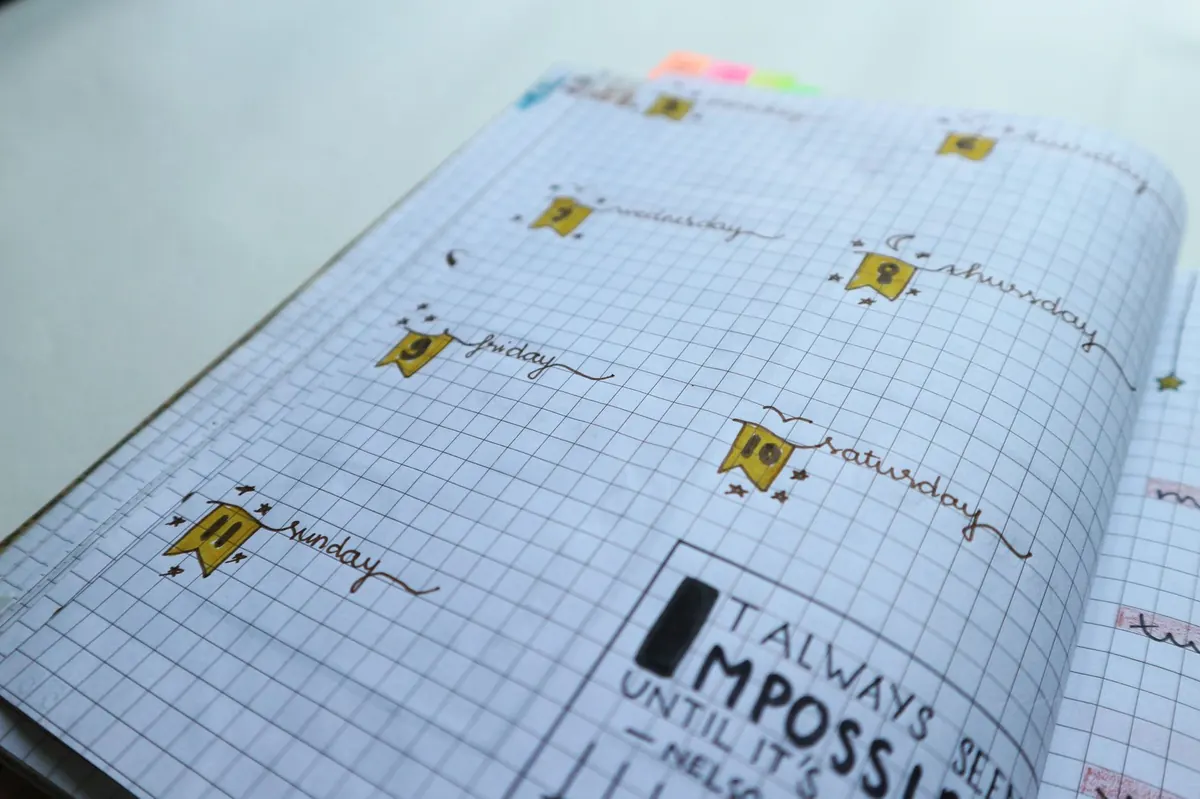
A new notebook is a hopeful object. It smells of glue and possibility, and for a week or two you write in it every night. Then life intervenes, three days pass, and it ends up under a stack of post. When it resurfaces, the gap feels like proof that journaling isn't for you.
It is. Most people who quit do so because of habits that turn a five-minute pleasure into a chore. Fix those and the practice tends to look after itself.
1. Chasing perfect prose
The first entry often reads like a job application: full sentences, tidy paragraphs, careful spelling. By page three the effort has become the point, and the writing slows to a crawl.
That's the first mistake — treating the page as a draft. The second follows close behind: buying an expensive notebook before the habit exists, then feeling unable to ruin it.
Both come from the same misunderstanding. A journal is not a published essay. Nobody is marking it, and the most useful material is usually the bit you'd instinctively tidy up: the half-finished thought, the grumble, the sentence that changes direction halfway through.
Try this instead:
- Write at speed and don't go back. On paper, cross out rather than tear out.
- Start in a cheap exercise book or a notes app. Buy the good one once the habit has stuck.
- Turn off spellcheck if you're typing. Red underlines pull you out of the thought.
- Set a timer for eight minutes, and stop when it goes — mid-sentence if necessary.
2. Waiting for the right mood
Mistake three is waiting to feel like writing. Mistake four is opening with a promise you can't keep: forty minutes, every night, no exceptions. Miss one Wednesday and the whole plan collapses.
Mood follows action more reliably than it precedes it, so lower the stakes and attach the writing to something you already do. The kettle boiling. The last cup of tea of the evening. The train home. The phone going on charge.
Ten minutes is plenty. Two lines count. In the first month the aim isn't insight — it's turning up often enough that the notebook stops feeling like a stranger.
3. Picking prompts at random
Prompt lists are useful and easy to misuse. That's mistakes five and six: jumping between unrelated prompts every day, and forcing a prompt that has nothing to do with your week. You end up with thirty entries that don't connect and no sense of what you actually think.
Give yourself a thread. Choose one theme for a week or a month — work, family, money, sleep, the house — and let the prompts serve it. You'll notice patterns far sooner than you would from scattered questions.
Keep a short list of fallbacks for days when nothing surfaces:
- What took more energy than it deserved today?
- What did I agree to that I'd rather have declined?
- What did I notice on the way home that I'd normally walk past?
- What's still unfinished from yesterday, and does it matter?
- Who did I speak to, and what did they seem to need?
Two or three of those, answered honestly, will carry a week.
4. Writing for an audience
Mistake seven is writing as though someone will read it — a partner, a parent, a future version of yourself with better judgement. The result is a journal that sounds like a polite email to the council.
Mistake eight is subtler: performing. Writing for the person who'll read it in ten years encourages tidy summaries such as "a good day overall", which tell you nothing when you come back to them.
Decide once who the notebook is for, then write accordingly. If privacy is the sticking point, deal with it practically rather than emotionally: keep it somewhere unremarkable, don't leave it open on the kitchen table, and if you use a notes app, check whether it syncs to a shared account. Knowing the answer removes the hesitation.
5. Only recording the big days
Mistake nine is saving the page for something worth saying. Holidays, rows, job offers. Six months of that gives you a highlight reel with all the texture missing.
Mistake ten — the one that ends most habits — is treating a missed day as a broken streak. Two days off becomes a week, then a month, then a fresh notebook and a fresh start that fails in the same place.
Ordinary entries are the ones you'll be glad of later. They need no shape and no meaning. Something like this is plenty:
Rain all morning. Twenty minutes on the phone to the council, mostly on hold. Made soup anyway. Tired, but not unhappy.
If you miss a fortnight, write the date and carry on in the same book. Don't begin again on page one. The gap is part of the record.
A routine that survives a bad week
None of this asks for willpower so much as a low floor and a bit of structure. Five habits do most of the work:
- Attach it to something. Same cue, same place, most days. The cue does the remembering for you.
- Set a floor, not a target. One sentence finishes an entry. Anything beyond that is a bonus.
- Keep one live question. Carry a single question for the month and answer it repeatedly from different angles.
- Read back once a month. Skim, mark a line that stands out, and look for repeats: the same name, the same complaint, the same small pleasure. That's where the useful information sits.
- Stay in the same notebook. A half-empty book with gaps in it is a more honest record than five pristine ones with ten pages used.
Keep it small, keep it dull, keep going. A journal earns its value over months, not evenings, and the entries you nearly didn't bother with are often the ones that show you what was really going on.
One sensible note: if regular writing keeps surfacing difficult memories or a low mood that lingers, mention it to your GP or a qualified therapist. A notebook is a good companion to proper support, not a replacement for it.
Photo: webvilla / Pixabay